Recognizing when market habits follow you away from the screen
Scenario planning can be useful, but constant checking and overthinking deserve clear boundaries.
Practical financial knowledge, with sources you can inspect.
283 検索結果

Scenario planning can be useful, but constant checking and overthinking deserve clear boundaries.

A learning roadmap covers terminology, structured practice and evidence-based review rather than shortcuts to income.

Financial obligations, exposure size and behavior under losses all matter when evaluating speculative risk.

A structured order review separates the market idea from quantity, direction and platform instructions.
The article connects sustainable work habits with the attention required for financial decision making.

Several open trades can share one underlying risk while competing for the same limited attention.

Curiosity, specific practice and realistic expectations provide a better learning framework than rushing toward expertise.
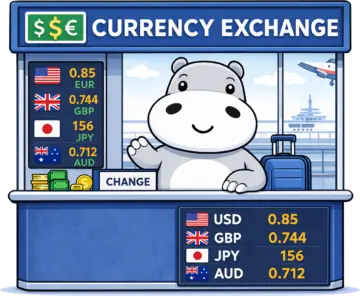
Foreign exchange involves two currencies, so a price movement must always be read in relation to another currency.

Price increments and monetary exposure are separate concepts when interpreting a currency quotation.
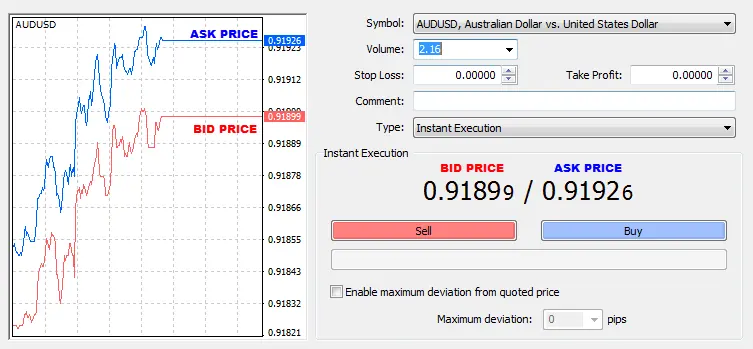
A commission-free label does not describe the complete cost of buying and selling a currency exposure.

The order quantity matters because the same price movement has different cash effects at different sizes.
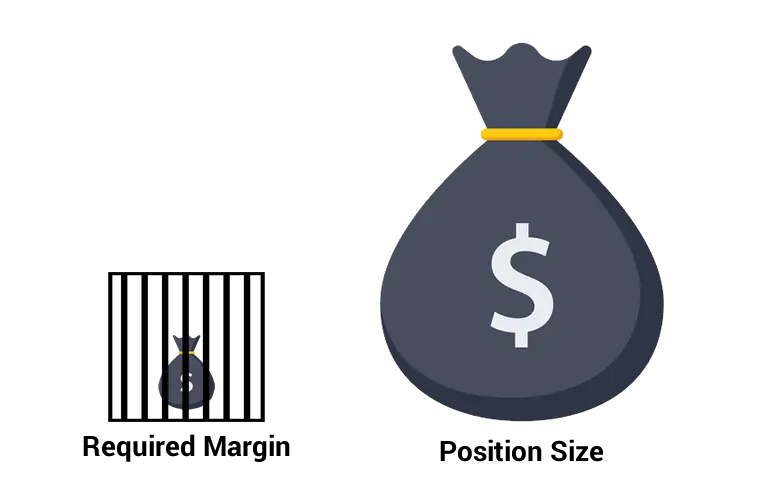
Collateral set aside for a leveraged position is different from a fee or a maximum possible loss.
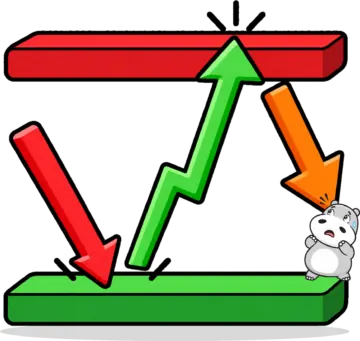
Historical turning areas can organize a chart, but they do not impose a floor or ceiling on future prices.
Connecting selected highs or lows is a visual method that depends on explicit and consistent choices.

Technical analysis organizes historical prices into patterns and hypotheses rather than certain forecasts.
Line, bar and candlestick views emphasize different parts of a price series and its chosen time interval.
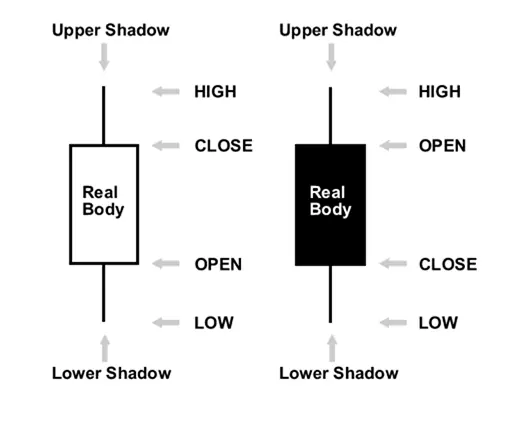
The body and shadows summarize four price observations within one selected interval.
An equal-weight average smooths selected prices while remaining dependent on past observations.
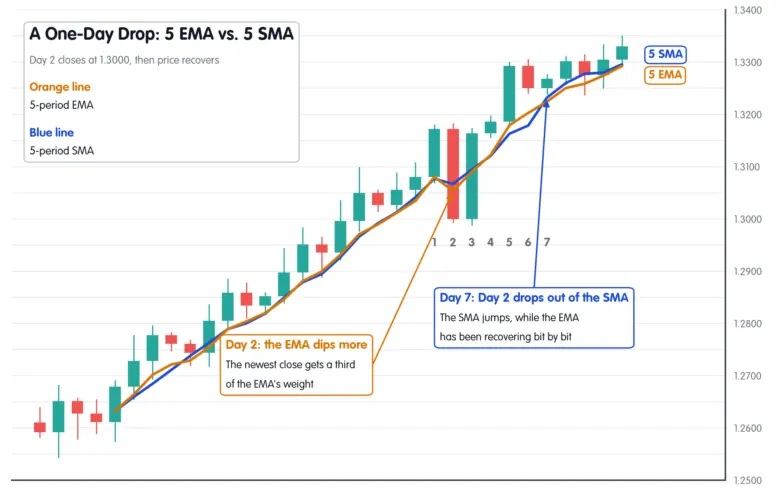
An EMA gives newer prices more influence, creating a different balance between responsiveness and smoothing.
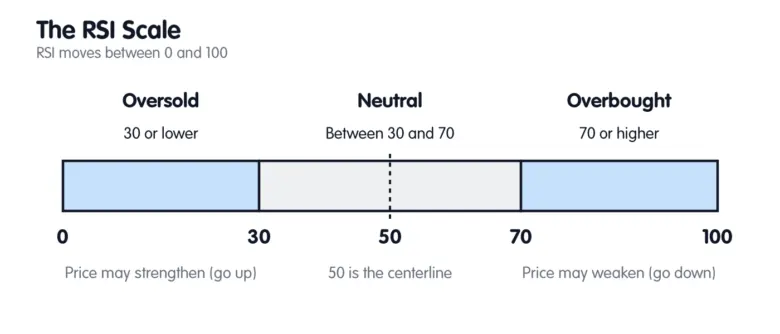
A momentum reading can describe recent strength while remaining elevated or depressed during a trend.
The familiar three settings describe different calculations rather than three moving averages drawn directly on price.

Band width and distance from an average provide context without defining an automatic trading opportunity.
The latest close is measured against a recent high–low range, with smoothing choices affecting the displayed lines.
Compounding applies to savings and borrowing.